What is Trade Creation?
- When higher-cost imports are replaced by lower-cost imports due to the formation of a trading bloc or trade agreement.
- If a trading bloc is a customs union (or a higher level of trading bloc), there may be trade creation.
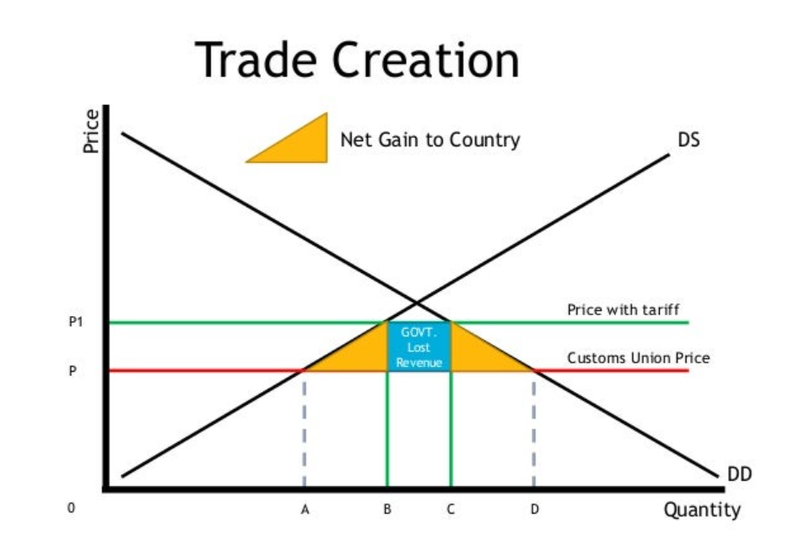
- Trade creation occurs when the entry of a country into a customs union leads to the production of a good or service transferring from a high-cost producer to a low-cost producer.
- For example, consider a scenario where Bulgaria enters the EU.
- Previously Bulgaria had not been exporting potatoes, as it faced a tariff from the EU.
- However, after joining the tariff on Bulgarian potatoes is relaxed and it can trade with Poland, as it is more efficient at producing potatoes.
- Trade creation leads to increased consumer surplus and reduction in price, leading to an overall welfare gain.
- However, like all free trade, local firms might have to downsize as they are unable to compete with imports.
- The diagram for trade creation is similar to that of free trade.
Trade Diversion
- When lower-cost imports are replaced by higher-cost imports due to the formation of a trading bloc or trade agreement.
- A customs union might also lead to trade diversion.
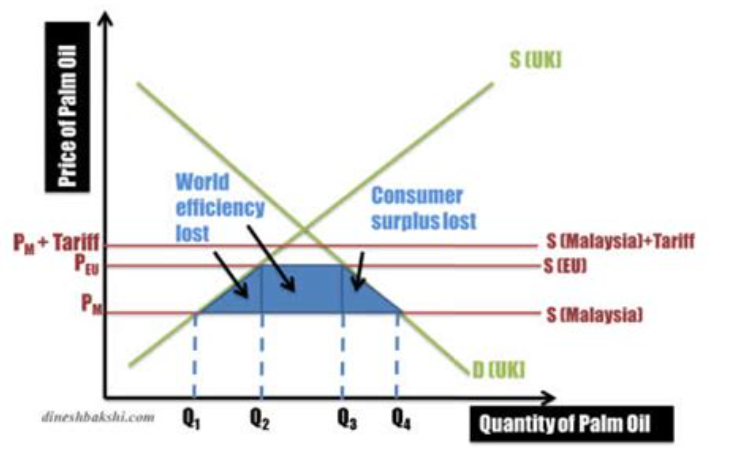
- Trade diversion occurs when the entry of a country into a customs union leads to the production of a good ore service transferring from a low-cost producer to a high-cost producer.
- For example, consider Turkey joining the EU.
- Previously, they had been importing cheap steel from China.
- But once they join the EU, they also adopt its tariffs against importing steel, leading to reduced steel imports from China into Turkey.
- Thus there is now less trade and an overall welfare loss as Turkey imports from relatively inefficient EU producers instead.
- For example, consider Turkey joining the EU.
Sources
https://www.slideshare.net/slideshow/trade-deflection-creation-and-diversion/17716308